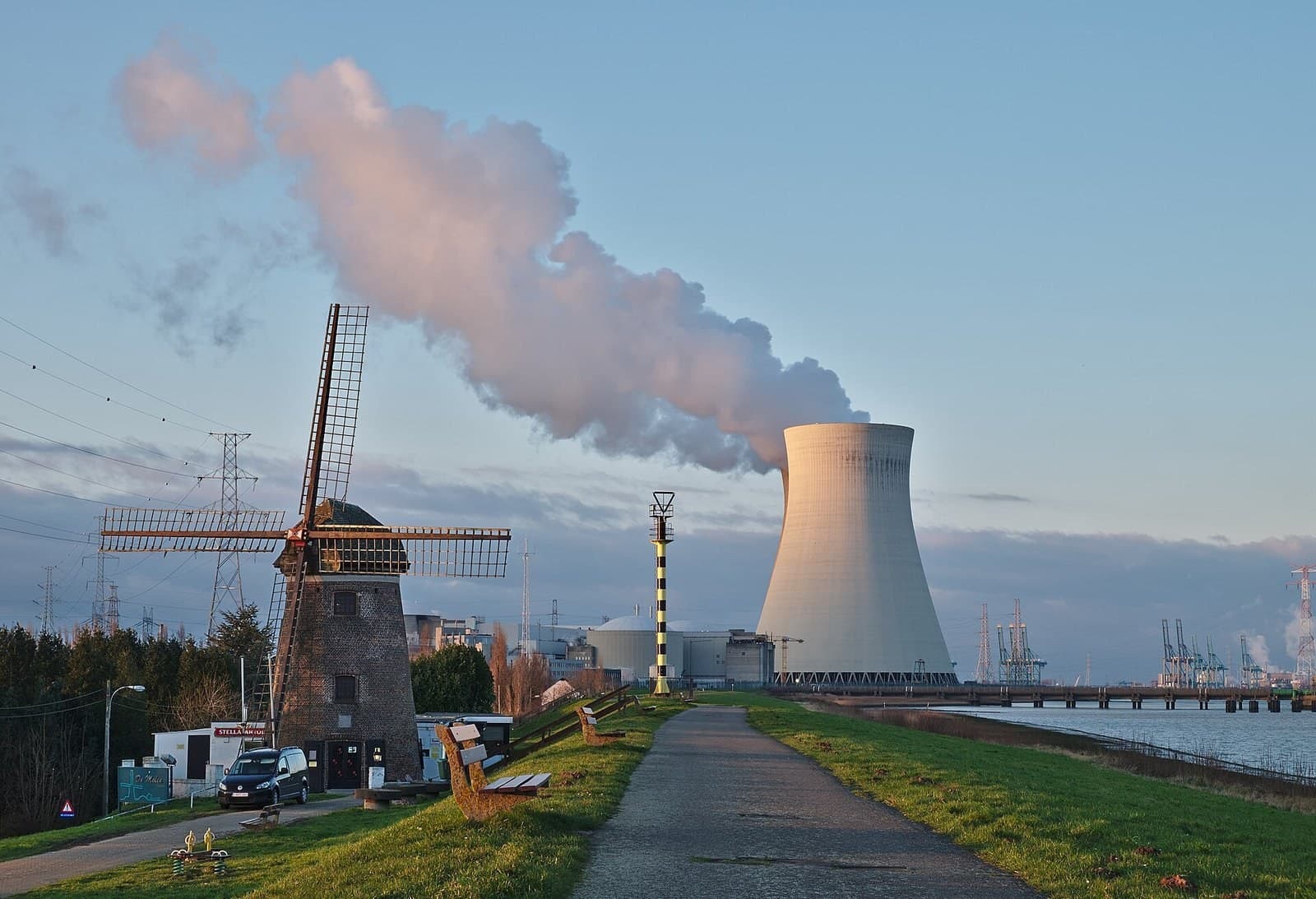
The nuclear revival has stopped being a conference theme and started being pouring schedules. Reactors totalling 78 gigawatts are under construction in 15 countries, among the highest levels in three decades1. The distribution, though, is what the averages hide: about half of that capacity is rising in one country. China has more than 38 reactors under construction, roughly 39 gigawatts, more than the rest of the world combined, and has ranked first in new build for 18 consecutive years2.
The cadence is the impressive part. In April 2025 the State Council approved ten more reactors across five sites, the fourth consecutive year of at least ten approvals; 46 reactors were green-lit between 2019 and 20243. No other country's approvals have come at even half that pace over the past decade. France built its fleet in one historic sprint in the 1970s and 80s; China has industrialised the sprint into a permanent schedule, with standardised designs, serial supply chains, and crews that roll from one completed unit to the next site.
Chinese nuclear reactor approvals, sustained for four consecutive years through 2025. Half the world's capacity under construction is Chinese.
Why the climate changed
Three forces converged to end nuclear's Western winter, and none of them was sentiment. The 2022 gas shock repriced energy security overnight and made every megawatt of domestic baseload a strategic asset; countries that had legislated phase-outs found themselves extending licences instead. Climate accounting matured to the point where grids modelling deep decarbonisation kept finding the same answer, that firm low-carbon capacity makes the last 20% of the transition affordable. And then the AI demand wave arrived with an appetite for exactly nuclear's product. Germany, which completed its exit in 2023 weeks before the demand story turned, stands as the counterfactual everyone else now cites.
The quietest half of the revival is the existing fleet. Life extensions to sixty and even eighty years, power uprates squeezed from old turbines, and the reversal of announced closures together add more low-carbon supply this decade than new construction does, at a fraction of the cost. A paid-off reactor is among the cheapest electricity on earth; the industry's best economics were built decades ago and merely needed permission to keep running.
What the West finished, and what it cost
The Western scoreboard finally has completions on it, and they carry their own lesson. Georgia's Vogtle units 3 and 4, America's first new reactors in a generation, entered service in 2023 and 2024 after years of slipped dates and a budget that roughly doubled4. France's Flamanville-3, begun in 2007, connected to the grid at the end of 2024 and reached full power only on 14 December 2025, more than a decade late5. Both projects proved the same pair of facts: the West can still build reactors, and it has not built them on time, because first-of-a-kind projects with cold supply chains and lapsed workforces relearn everything at the owner's expense.
The gap with China is not physics; it is repetition. Chinese builds run on the same few designs, ordered continuously, with component factories and construction crews that never demobilise. Western programs built one cathedral per generation and paid cathedral prices. The policy conclusion has finally sunk in on both sides of the Atlantic: the plans now emphasise fleets of identical units, and the test of the revival is whether the second Western unit of anything costs meaningfully less than the first.
The customer changed
What broke the Western financing logjam was not climate policy; it was a new buyer. The AI data-centre build-out arrived wanting gigawatt-scale, always-on, carbon-accounted power in single contracts, and it has money. Hyperscalers have underwritten reactor restarts at closed plants, signed decades-long power purchase agreements, and seeded the order books of the small-modular-reactor developers. On the IEA's supply outlook for data centres alone, nuclear contributes roughly 175 terawatt-hours of new generation by 20356. For the first time since the 1970s, nuclear has a customer that wants the product more than it fears the headline.
The restart is the emblematic transaction. A shuttered reactor holds most of its capital already sunk, licensed, and connected; a buyer who guarantees twenty years of offtake converts it from liability to asset with no new concrete at all. The economics that closed these plants, cheap gas and flat demand, inverted in three years, which says less about nuclear than about how quickly the demand backdrop moved.
China's programme is better read on its own terms than as a mirror for Western anxieties. Nuclear is a modest share of Chinese generation, a system still dominated by coal and increasingly by solar; the reactor fleet's job is coastal baseload where the load centres are and the coal is not. The ten-a-year cadence exists because nuclear competes inside a planning system that prices energy security and air quality directly, and because each approval cycle strengthens an export product: the Hualong One is already the reactor China sells abroad, with the domestic fleet as its reference plant and its cost curve. The sprint is industrial strategy as much as electricity policy.
The fuel and the vendors
Two supply chains sit under the construction map. Fuel: enrichment remains concentrated among a handful of providers, with Russia holding a share large enough that Western utilities spent the years since 2022 contracting away from it and reviving domestic enrichment capacity. Vendors: the export market has consolidated around Russia and China for most of the developing world's programs, with Korea's KEPCO the West-aligned exception that delivers on schedule, and Western vendors competing mainly where politics excludes the other two. Reactor exports are sixty-year relationships, fuel, training, spares, and financing included, which is why states treat them as foreign policy with a turbine attached.
Measure | Value |
|---|---|
Capacity under construction, worldwide | 78 GW in 15 countries |
China's share | About half; 38+ reactors, roughly 39 GW |
Chinese approvals | 10 a year, four consecutive years |
Chinese approvals 2019-2024 | 46 reactors |
Vogtle 3 and 4 in service | 2023 and 2024 |
Flamanville-3 at full power | 14 December 2025 |
The comparison with renewables belongs here too. Solar, wind, and batteries won the price war for bulk energy, and nothing in the nuclear revival reverses that. What nuclear sells is a different product: capacity that shows up in January's windless week, on a footprint of hectares rather than counties, from a connection the grid already trusts. Systems are learning to price those attributes separately, and where they do, the two technologies stop being rivals and start being a portfolio. Where markets price only energy, new nuclear still cannot compete, which is why every Western project of the decade has needed either a state balance sheet or a hyperscaler's.
What could still stall it
The revival's constraints are the boring ones. Skilled labour competes with the chip fabs and the grid build-out for the same welders and electricians. Large forgings and turbine components run through supplier queues years long. Western regulators are being asked to license new designs at a pace their staffing was never built for, and SMR economics remain a promise until a fleet of identical small units actually exists to prove the factory thesis. None of these is an argument in the old nuclear debate; all of them are schedule risks in the new one, and schedule is what the last decade of Western projects failed on.
There is also an asymmetry here: if the 2030s electricity system leans harder on nuclear, and the world's reactor-building capacity is half Chinese and much of the rest Russian, then the technology the West is re-embracing for energy security is one whose industrial base sits substantially with its strategic rivals. The revival narrows one dependency, on gas, while widening another, on the only supply chains still fluent in the product.
What to watch
On safety, the argument has shifted ground. The operating record has lengthened without a major accident since 2011, the designs under construction carry passive safety systems their predecessors lacked, and the comparison grid planners actually face is not nuclear against perfection but nuclear against the health and climate record of the fossil plant that would otherwise run. That framing, more than any advocacy, is what moved public opinion in most surveyed countries across the decade.
Four markers. China's approval count for 2026, because the streak's continuation is the single best indicator of the global trajectory3. The first Western SMR actually generating, because the model's economics are unproven until then. The delivered cost of the next AP1000s and EPRs against their predecessors, because fleet learning is the West's whole theory of revival. And the share of new data-centre capacity signing nuclear offtake6, because that contract flow is the difference between a nuclear renaissance and another decade of renderings. This time the concrete is real; what the decade will answer is whose concrete, at what price, and on whose schedule.
NucNet, Capacity of reactors under construction at one of highest levels in 30 years: 78 GW under construction in 15 countries, about half in China.
World Nuclear Association, China, World Nuclear Outlook: more than 38 reactors, about 39 GWe, under construction; first for 18 consecutive years; building more than the rest of the world combined.
Power Technology, China approves construction of ten new nuclear reactors (April 2025): ten reactors across Fangchenggang, Haiyang, Sanmen, Taishan, and Xiasu; fourth consecutive year of at least ten; 46 approvals 2019-2024.
American Nuclear Society Newswire, Vogtle project reporting: delays and cost growth through construction; units entered service in 2023 and 2024.
NucNet, Delayed Flamanville-3 nuclear plant reaches 100% full power (December 2025): full power on 14 December 2025 on a project begun in 2007.
IEA, Energy and AI: about 175 TWh of additional nuclear generation for data centres by 2035 in the base case.