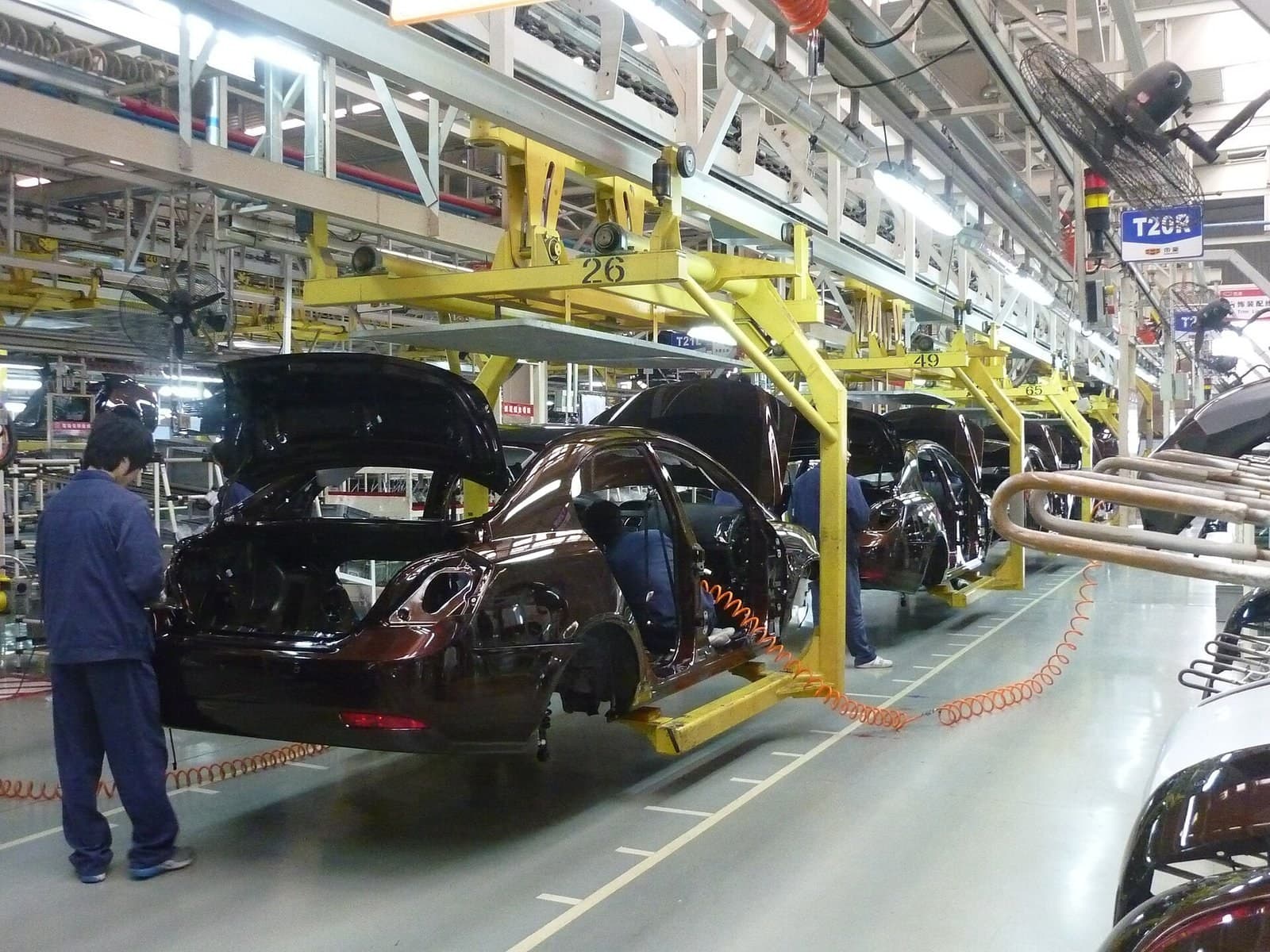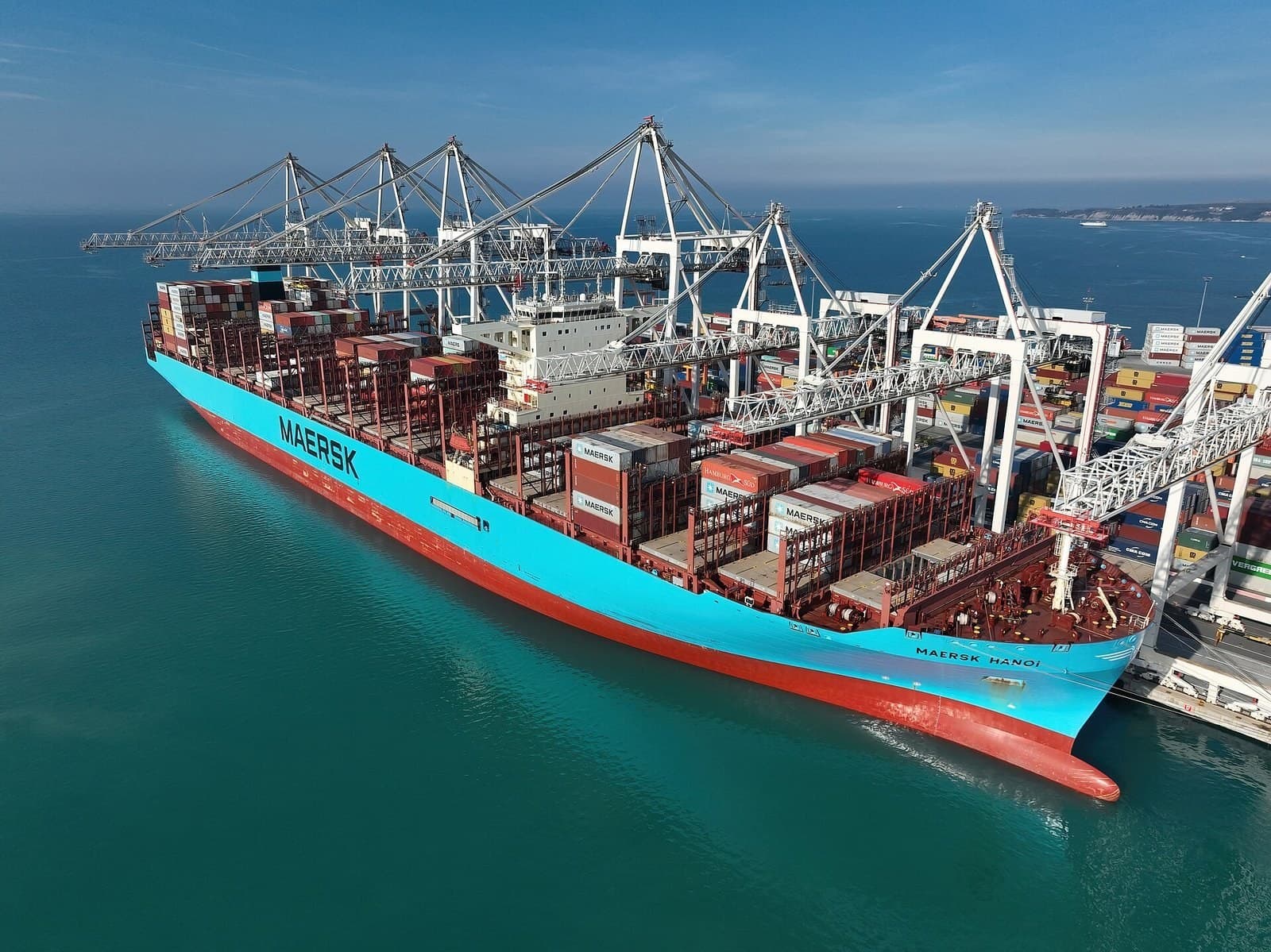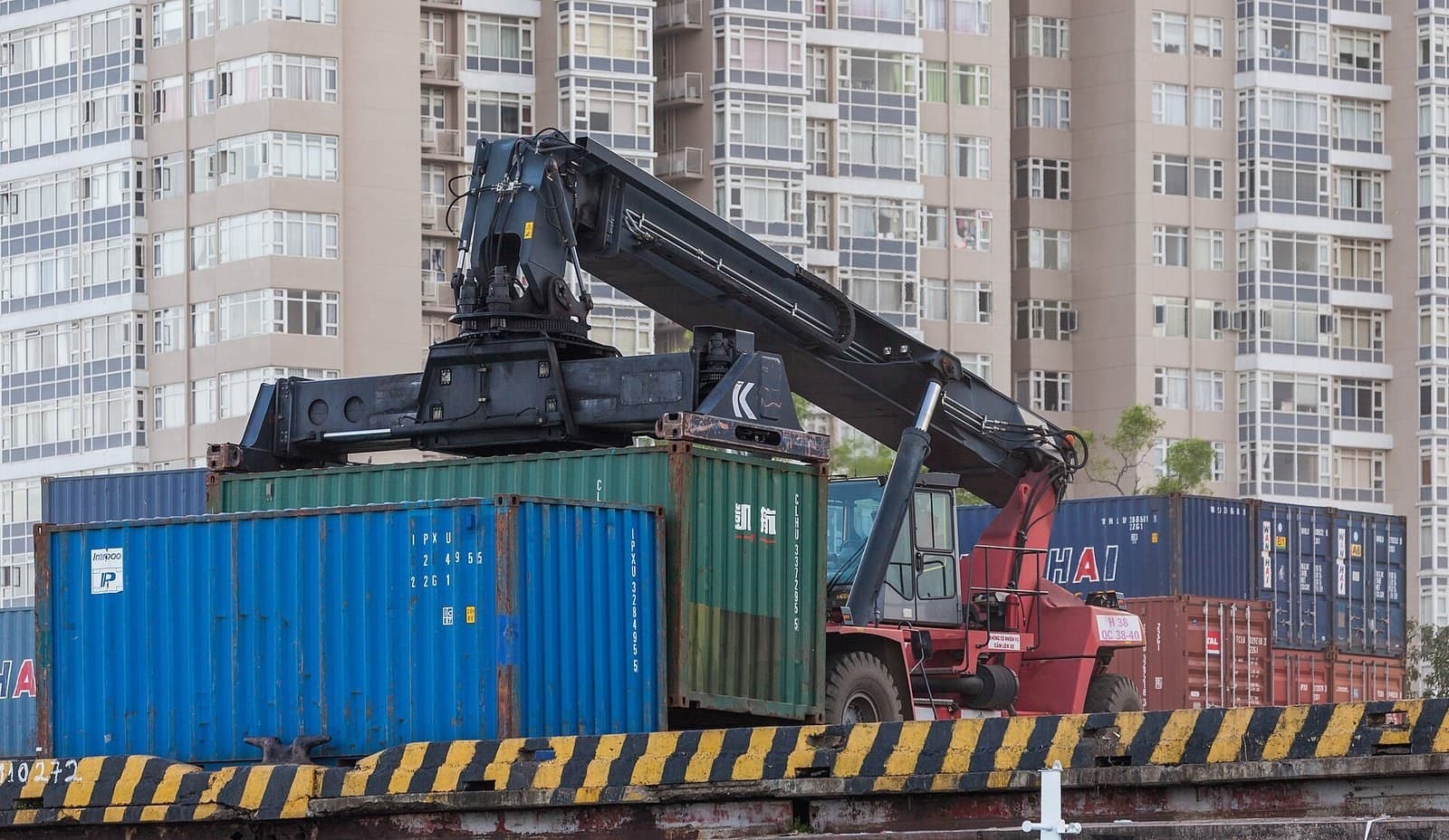
Vietnam's 2025 trade ledger set records at both ends. Its surplus with the United States reached nearly $134 billion, the largest of any country except China, up from $123.5 billion in 20241. Its imports from China also set a record: $186 billion, up from $144 billion the year before1. Those two numbers are not in tension; they are the same supply chain measured at its two ends. Components, machinery, and materials flow south across the land border, assembly happens in the Red River and Mekong deltas, and finished goods sail east.
The country in between grew more than 8% in 20252, among the fastest rates on earth, while conducting the diplomatic equivalent of carrying two full cups up a staircase: an American administration convinced the surplus is Chinese goods relabelled in transit, and a Chinese neighbour that supplies the inputs Vietnamese factories cannot yet make. What follows is how the in-between economy actually works, what the 2025 tariff deal did to it, and what the world's most successful trade-war arbitrage does next.
Vietnam's record 2025 trade surplus with the United States, and its record imports from China the same year.
How the in-between economy was built
The foundation predates the trade war. Vietnam spent two decades courting export manufacturing with free-trade agreements, cheap labour, coastal industrial parks, and political stability, and one company anchored the strategy: Samsung, whose six Vietnamese plants generated $62.5 billion of revenue and $54.4 billion of exports in 2024, about 13% of Vietnam's entire GDP and a similar share of its exports, including roughly half of Samsung's global smartphone output3. Electronics now carries over 35% of the country's exports, a record $165 billion3. No other economy of Vietnam's size is this concentrated in assembly for export, and few political systems anywhere have bet this much on remaining agreeable to all buyers.
The 2018-25 tariff rounds then poured accelerant on the foundation. Every tariff on Chinese goods made a Vietnamese address worth a margin, and factories moved with textbook speed: first final assembly, the cheapest step to relocate, then gradually the suppliers behind it. Disbursed foreign investment hit a five-year high of $27.6 billion in 20252. By mid-2025 Vietnam shipped 30% of America's smartphones, second only to China3. The 'China plus one' strategy of a thousand corporate slide decks is, in practice, mostly 'plus Vietnam'.
Measure | Value |
|---|---|
Surplus with the United States | About $134 billion, a record |
Imports from China | $186 billion, a record |
GDP growth | More than 8% |
Disbursed FDI | $27.6 billion, five-year high |
Samsung's share of GDP | About 13% |
Electronics share of exports | Over 35%, $165 billion |
Share of US smartphone imports | 30% by Q2 2025 |
The word 'transshipment' carries more weight in this story than any other, so it needs precision. True transshipment, Chinese goods relabelled in a Vietnamese warehouse, is customs fraud, exists, and is the minority of the flow by every serious estimate. The majority is something tariff law has always struggled to name: genuine Vietnamese assembly, employing millions, adding real if thin value, atop component layers that remain Chinese because scale economics keeps them there. The first is a crime with a paper trail. The second is the entire development model of East Asia, as practised by Japan, Korea, and China itself on their way up.
What the tariff deal actually says
Washington's answer arrived in July 2025: a framework putting a 20% tariff on Vietnamese goods, roughly half the rate threatened in the spring, with a 40% rate reserved for goods judged to be transshipped Chinese products4. The two-rate structure names the American theory of the case: Vietnam the manufacturer is a partner to be tariffed moderately, Vietnam the relabeller is a loophole to be closed. The deal's unfinished business is the line between them, and negotiators have spent the time since arguing over what 'transshipped' means when a phone's parts are Chinese, its assembly Vietnamese, and its value-added split down the middle4.
That definitional fight carries most of the economics of the matter. Rules of origin that demand high Vietnamese content would force the supply chain's deeper layers, components, materials, tooling, to migrate out of China at a cost of years and billions; rules that accept assembly as origin leave the corridor intact and the 40% rate mostly ornamental. Every company's Vietnam strategy is a bet on where that line settles, which is why the paperwork war in customs offices matters more to the region's industrial map than any single tariff number.
Hanoi's two-cup diplomacy
Vietnam's response to being squeezed has been to make itself more valuable to both squeezers. Toward Washington: buy more American gas, aircraft, and farm goods, sign the deal at 20% rather than fight, and collect the strategic dividend, which arrived in February 2026 when the White House pledged to remove Vietnam from the strategic export control lists that slow sales of semiconductor tools and dual-use technology5. Toward Beijing: keep the border humming, welcome Chinese component makers building Vietnamese plants, and avoid any language that smells of containment. The bet is that both powers need the corridor more than they resent it.
The export-control removal matters because it points past assembly. Taking Vietnam off the restricted lists opens the door to fab equipment and advanced tooling, exactly what a country needs to climb from assembling electronics to making their components. Vietnam wants what Indonesia demanded of nickel and Morocco built for cars: the deeper layers of the value chain, onshore. Its leverage for getting them is the one thing every supply-chain planner in Washington and Seoul agrees on: there is no second Vietnam to move to if Vietnam becomes unavailable.
The comparison Hanoi studies is not China but Korea and Taiwan, the assemblers who made it out of assembly. Both climbed by forcing technology transfer while wages were low, building national champions behind the foreign plants, and spending heavily on engineering education before the demographic window closed. Vietnam has the second ingredient only in embryo, FPT and Viettel are ambitions rather than TSMCs, and its window is narrower: it is getting old at a lower income than its models did, and the automation wave means tomorrow's factories will hire fewer of the workers whose cheapness built yesterday's. The tariff decade handed Vietnam volume. Converting volume into capability is a different game, with a clock on it.
The fragilities
Three, in ascending order of difficulty. Concentration: an economy where one foreign company is 13% of GDP3 and one buyer takes a third of exports has handed its business cycle to boardrooms in Suwon and voters in Ohio. Labour and land: wages rise with success, the workforce ages faster than Korea's did at the same income level, and the parks around Hanoi and Ho Chi Minh City are filling; the next factories bid for scarcer inputs. And the arbitrage itself: Vietnam's position exists because US-China tariffs exist, and both a grand-bargain detente and a full decoupling would shrink it, the first by removing the margin, the second by forcing a choice of sides the whole model is designed to avoid.
There is also a reading of this story in which everyone is getting what they want, which is worth stating because it may simply be true. American consumers get phones that are not tariffed at Chinese rates; American strategists get supply chains that are one border removed from Beijing's jurisdiction, which matters in scenarios short of war even if the components remain Chinese; China keeps selling the high-value layers while its neighbour absorbs the political heat; and Vietnam industrialises on the difference. Arrangements this convenient for all parties tend to persist long after the rhetoric says they cannot, and the record flows of 2025, set in the very year the punitive framework was signed, suggest the corridor's participants believe exactly that.
What to watch
The Vietnamese case is the demand-side mirror of the supply stories: every chokepoint, from chips to minerals, eventually routes through an assembler, and Vietnam is where the routing now concentrates.
The transshipment rulebook first: the content thresholds and enforcement cases that give the 40% rate its real meaning4. Second, the composition of Chinese imports, because a shift from finished components toward machinery and materials would mean the supply chain's roots are genuinely replanting rather than merely re-invoicing. And third, the surplus number itself: Washington has made clear it reads $134 billion as a provocation1, and Vietnam's task for the rest of the decade is the strangest in trade politics, to keep getting richer off a number it must somehow stop growing. No economy has yet managed that trick under this much scrutiny. Vietnam's forty-year record of threading impossible needles, war to normalisation to WTO to this, is the best reason to think it might be the first.
AJOT, Vietnam's trade surplus with US hits record high in 2024 ($123.5 billion), and 2025 full-year reporting: surplus near $134 billion; imports from China $186 billion in 2025 after $144.2 billion in 2024.
The Diplomat, Vietnam's economy grew by more than 8 percent in 2025; Vietnam Briefing, Vietnam's economy in 2025: disbursed FDI at a five-year high of $27.62 billion.
The Investor, Samsung's revenue makes up 13% of Vietnam's GDP in 2024: $62.5 billion revenue, $54.4 billion exports, about half of global smartphone output; Vietnam Briefing, Vietnam's electronics industry: electronics over 35% of exports at a record $165 billion; 30% of US smartphone imports by Q2 2025.
Chatham House, Vietnam's tariff deal with Trump reflects balancing act between US and China (July 2025), and CNBC, Vietnam reciprocal tariffs reflect trade deficit and ties to China: 20% rate on Vietnamese goods, 40% on transshipped goods, with the definition of transshipment contested since.
The Diplomat, US to remove Vietnam from export control list (February 2026): removal from lists D:1-D:3 covering semiconductor tools, aerospace components, and dual-use software.