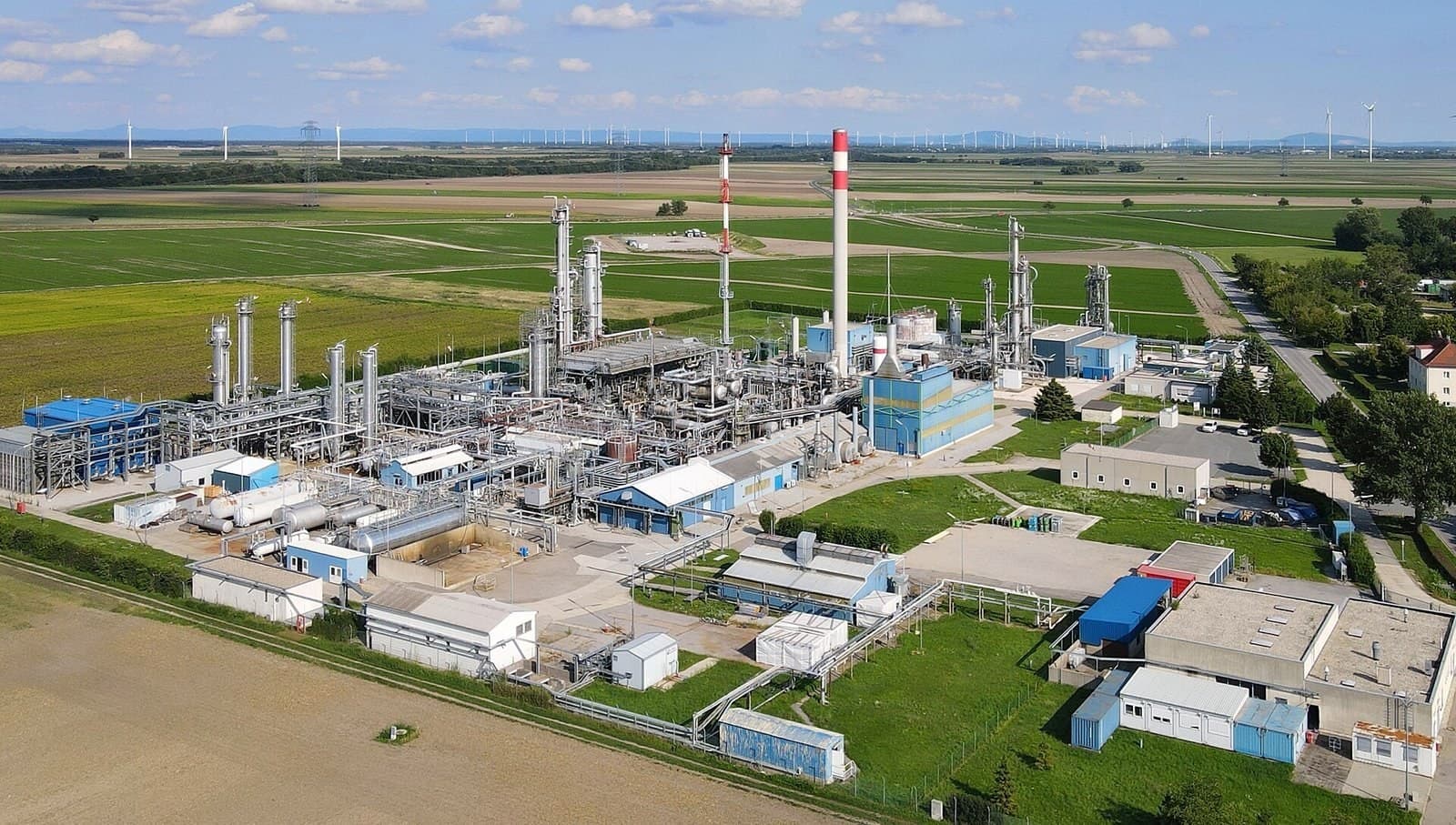
Nitrogen fertilizer is natural gas in a solid, spreadable form. The Haber-Bosch process takes methane for both its hydrogen and its heat, and in a European ammonia plant gas made up as much as 90% of variable production cost when prices spiked1. So when Russian pipeline cuts sent European gas above 300 euros per megawatt-hour in the summer of 2022, the consequence was chemical before it was political: by August, roughly 70% of Europe's ammonia capacity had stopped12. Yara alone cut to about a third of its European capacity1. Nobody legislated it. The spreadsheet did it.
The 2022 emergency produced emergency answers, tariff suspensions on imported ammonia and urea, task forces, and a quiet increase in dependence on exactly the molecules Europe was sanctioning in other forms. The more consequential story is what happened after the peak passed: gas settled well above its pre-war normal, and the shut plants faced a decision rather than a pause. An industry analyst's 2022 prediction, that the closed 70% was unlikely to return3, has simply come true.
The share of European ammonia capacity shut by August 2022 as gas prices made production unprofitable. Much of it never restarted.
Why ammonia cannot hedge its way out
Other gas-heavy industries survived 2022 by efficiency, fuel-switching, or passing costs through. Ammonia's chemistry forecloses most of that. The gas is not merely burned for heat; its molecules become the product, hydrogen stripped from methane and bonded to nitrogen, so no boiler upgrade changes the arithmetic. The process runs continuously at scale or not at all, making plants expensive to idle and worse to cycle. And the output is a global commodity priced off the cheapest producer, so a European maker cannot pass its gas bill to a farmer who can buy Algerian urea at the world price. Expensive gas, a process that cannot change its feedstock, and a product priced globally: the only exit is to leave, and the industry has been leaving since 2022.
The 2022 shock also exposed a nested dependency few outside the industry had priced: carbon dioxide. Ammonia plants are Europe's main source of food-grade CO2, the by-product that carbonates drinks, stuns animals for slaughter, and chills logistics; when the fertilizer plants stopped, abattoirs and breweries discovered their supply chain ran through Haber-Bosch. Industrial systems accumulate these couplings quietly, and it takes a shock to reveal them. A continent that lets its ammonia go offshore is also outsourcing whatever else turns out to have been riding along.
From curtailment to closure
The difference between a curtailed plant and a closed one is the difference between a bad quarter and a changed continent, and Europe has been crossing it plant by plant. SKW Piesteritz, Germany's largest urea producer, entered indefinite closure in January 2025; major ammonia units in Germany and Belgium have been shuttered outright; and about 9% of Europe's entire chemical production capacity closed between 2022 and 2025, with the pace accelerating rather than easing4. Each closure is individually rational: a plant built for $20 gas cannot compete at $40 against American producers paying $3 and Gulf producers paying less. Collectively they are the offshoring of Europe's nitrogen supply, executed by accountants.
The import numbers record the handover. European ammonia and urea imports rose through 2024 and 2025 and are projected to keep rising, arriving from the US, North Africa, the Gulf, and, through every diplomatic contortion, Russia, whose urea enters at a standard 6.5% tariff the EU has now moved to suspend5. Europe did not stop consuming gas-based fertilizer. It stopped making it, which converts an energy-price problem into a supply-chain dependency, with food at the end of the chain.
Then the carbon border arrived
Into this half-departed industry, on 1 January 2026, came CBAM, the EU's carbon border adjustment mechanism, which prices the emissions of imported fertilizer as if it had been made under Europe's emissions trading system5. The design logic is impeccable: without it, carbon pricing simply finishes the offshoring that gas prices started, exporting both the industry and its emissions. The transitional politics are harder: CBAM raises imported fertilizer's price for European farmers who no longer have a domestic alternative at scale, which is why Brussels is suspending the ordinary tariffs on ammonia and urea in the same breath it prices their carbon5, taxing with one hand and untaxing with the other while the strategy underneath stays unwritten6.
The strategic answer on offer is green ammonia: hydrogen from renewable electricity instead of methane, made where sun and wind are cheapest. The economics currently work best far from Europe, in Morocco's Tarfaya programme, in the Gulf, in Australia, which means even the decarbonised future of European fertilizer looks import-shaped. CBAM, in that reading, is less a wall than a procurement specification for the suppliers Europe intends to buy from instead.
Marker | Status |
|---|---|
Gas share of ammonia variable cost | Up to 90% at 2022 prices |
Capacity shut, August 2022 | About 70% |
Yara's European ammonia output | Cut to about a third, 2022 |
SKW Piesteritz | Indefinite closure from January 2025 |
EU chemical capacity closed 2022-25 | About 9%, accelerating |
CBAM on fertilizer imports | Live from 1 January 2026 |
EU tariffs on ammonia and urea | Being suspended to offset CBAM |
The history makes the stakes plain. Haber-Bosch was invented in Germany in 1913 precisely to break a fertilizer import dependency, on Chilean nitrate shipped past a hostile navy, and the technology that freed Europe from imported nitrogen fed the century's population growth; by common estimate, synthetic nitrogen sustains a large share of the people now alive. The same continent is now reassembling, through prices rather than a blockade, the dependency its most consequential invention existed to abolish. The molecules never stopped mattering; the plants just moved to where the methane is cheap.
What it means beyond Europe
Fertilizer is the commodity where energy policy becomes food policy with one harvest's delay. Europe's shutdown in 2022 tightened the world market at the same moment sanctions disrupted Russian and Belarusian nutrient exports, and the price shock landed hardest on farmers with the least credit, in Africa and South Asia, who cut application and paid in yield. Supplier countries read the episode as their opening: Morocco's OCP expanded output and African distribution into the gap, and every gas-rich state from Texas to the Gulf added export capacity aimed at the customers Europe's plants abandoned. The nitrogen map is being redrawn around cheap methane and, prospectively, cheap electrons, and Europe holds neither.
There is a counterargument worth hearing: perhaps making bulk commodities from expensive gas is exactly what a high-wage continent should stop doing, keeping instead the specialty chemistry, the agronomy, and the trading desks, as it did with textiles and steel before. The rejoinder is that nitrogen is not textiles: it is a security good with a harvest deadline, the EU's own 2022 communication called fertilizer availability a matter of food security1, and dependencies in security goods get tested. Europe is running the experiment of treating fertilizer as just another import. The test arrives with the next crisis in a supplier region, and the exposure is already on record.
There is a version of European policy that treats this as a portfolio to manage rather than a loss to mourn, and its outlines are visible in the current improvisations: diversified import contracts so no single supplier can squeeze a planting season, strategic storage of ammonia the way oil is stored, CBAM revenue recycled into the hydrogen infrastructure that could eventually re-anchor some production, and standing agreements with the new green-ammonia exporters whose plants European demand is effectively underwriting. Managed dependency is a real strategy; drifted dependency is merely a condition. The criticism the sector's own trade press keeps making is that Europe currently has the second while announcing the first6.
What to watch
The farm gate is where all of this converges, one season delayed and politically amplified. European farmers absorbed the 2022 price spike, the 2025 import premiums, and now CBAM's arithmetic, in a decade when their protests already reshaped national politics from Paris to Warsaw.
Four gauges. The TTF gas price against the American Henry Hub spread, because that differential is the closure schedule's actual author. The CBAM fertilizer settlement, the certificates surrendered and the exemptions won, because it will define whether carbon border pricing is a real instrument or a negotiated fiction5. Green ammonia contracts actually signed for European delivery, Tarfaya's first cargoes among them, because they are the only version of this story that ends with supply security and decarbonisation in the same sentence. And European application rates each season, because the quietest possible headline, farmers using less, is how a fertilizer dependency first shows up in the harvest. Within twenty seasons, Europe will have rebuilt its nitrogen on renewable electricity, secured it by contract from allies, or found out in a bad spring what the difference between $3 gas and $40 actually bought.
European Commission, Ensuring availability and affordability of fertilisers (November 2022): gas up to 90% of variable production cost; 70% of ammonia capacity shut; Yara at about a third of capacity; fertilizer framed as food security.
HortiDaily, Nearly 70% of Europe's ammonia production has been halted (2022).
ICIS, European shut ammonia production unlikely to return (October 2022).
Hakan Goral, 2026 ammonia market developments, and Bloomberg's 2026 survey of European chemicals: SKW Piesteritz in indefinite closure from January 2025; about 9% of European chemical capacity shut 2022-2025; rising import dependence.
World Fertilizer, EU to suspend import tariffs on ammonia and urea and CBAM: Europe's ammonia transition: CBAM in force from 1 January 2026 for nitrogen fertilizers; urea's 6.5% standard tariff suspended to offset it.
New AG International, Europe's fertilizer sector: there's a plan, but is there a strategy?.