On 2 December 2024 the United States expanded its semiconductor export controls against China for the third time in three years. On 3 December, China's commerce ministry answered with a first: an outright ban on exports of gallium, germanium, antimony, and superhard materials to the United States1. Not licences, which had throttled the trade since mid-2023, and not quotas: a prohibition, aimed at one country, in writing.
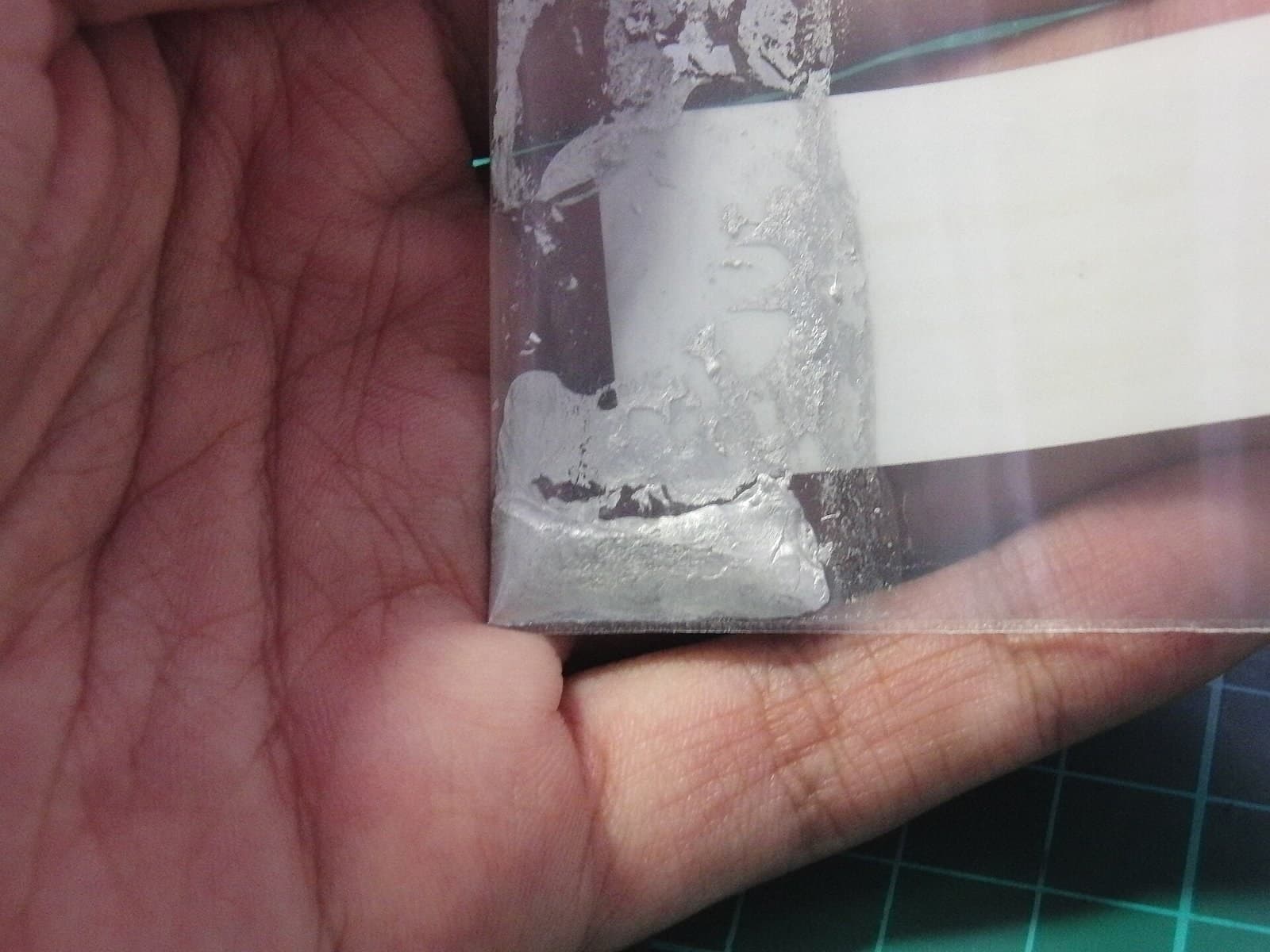
The materials were chosen with a metallurgist's precision. China produces about 98% of the world's primary gallium and 60% of its germanium, along with almost half its antimony2. The shares describe refined output; recycling and by-product recovery elsewhere chip at the margins without changing the order of magnitude. Neither metal is mined in its own right; both are recovered as traces, gallium from alumina refining, germanium from zinc smelting and coal ash, which means supply belongs to whoever already runs the world's biggest aluminium and zinc industries. Nobody decided in a ministry that China should corner gallium. It came with the smelters, and the ministry noticed what it was holding.
China's share of world gallium production. Germanium is about 60%, with refined output more concentrated still.
What the metals actually do
The tonnages are trivial, world gallium output is measured in hundreds of tonnes, and the dependencies are not. Gallium arsenide and gallium nitride are the radio-frequency and power semiconductors in radar arrays, electronic warfare pods, 5G base stations, satellite links, and fast chargers; there is no drop-in silicon substitute at the frequencies and power densities that matter. Germanium goes into fibre-optic preforms, infrared optics for night vision and missile seekers, and the solar cells on satellites. A military planner reading that list twice will notice it is mostly a list of military hardware, which is why the Pentagon's stockpile arithmetic appeared in the analysis of the ban within days3.
The US Geological Survey modelled the exposure before the ban landed: a total Chinese cut-off of both metals would cost the American economy about $3.4 billion in output, with gallium prices projected to rise more than 150% and germanium 26%3. The model turned out to be conservative in an instructive way: markets priced the risk premium faster and higher than the static estimate, because a static estimate assumes buyers only pay for metal, when in a shortage they pay for certainty.
How a by-product corner forms
The concentration has a mechanism worth spelling out, because it is the same one that will produce the next shortage. A by-product metal cannot be scaled on its own: gallium exists in economic form only dissolved in the Bayer liquor of alumina refineries, so gallium capacity is a percentage of aluminium capacity, wherever aluminium happens to live. When Chinese alumina and zinc smelting scaled through the 2000s and Western smelters closed, the trace-metal circuits closed with them, not because anyone bid for them, but because a recovery circuit attached to a dead smelter is dead too. The corner assembled itself one closure at a time, and stayed invisible until someone drew a line around it.
That mechanism also explains why the fix is so awkward. Reopening a gallium circuit means having an alumina refinery to attach it to, and the West's remaining refineries are old, marginal, and occasionally closing for unrelated reasons. The metal's whole market is small enough that no plausible price makes it a business worth building a smelter for; the smelter must exist for other reasons first. Mineral security, it turns out, depends on unglamorous industrial-base decisions that nobody treated as security questions at the time.
What the prices did
Germanium tells the cleanest story. It traded at just over $1,000 a kilogramme at the start of 2023, before the first licensing controls. By January 2025 the European price was $3,150; by October 2025 it reached $5,380, the highest since records began in 2011, with American buyers paying $5,700 to $7,000 through the licensing wall's remaining cracks4. That is roughly a quintupling in under three years, driven by the controls, by fibre demand from the AI data-centre build-out, and, in the estimate of traders, by Chinese state stockpile buying that tightened the market further4.
Date | Event | Price, per kg |
|---|---|---|
Early 2023 | Before controls | About $1,000 |
July 2023 | China imposes export licensing | Rising |
December 2024 | Outright ban on exports to the US | About $3,150 by January |
October 2025 | Record | $5,380 in Europe; up to $7,000 for US buyers |
Gallium moved similarly on a lower base, and both metals acquired the signature of a politically split market: one price inside China, a higher one in Europe, and a premium on top for anyone whose cargo had to pretend convincingly not to be American. Bans of this kind leak by design, through transshipment and relabelling, and the leak is itself the policy: Beijing can tighten or loosen enforcement as a dial, which is worth more in a negotiation than a hermetic seal it could only use once.
The dial turned twice
The instrument's flexibility got a demonstration within a year. In late 2025, as a broader tariff truce came together, China suspended the prohibition on gallium, germanium, antimony, and superhard-material exports to the United States, restoring a licensing regime rather than free trade5. Nothing about the underlying geology changed; the concession cost Beijing nothing it cannot reimpose with a notice. This is how China now practises mineral statecraft, up to and including the far larger rare-earth licensing regime of 2025: the restriction is the stock, enforcement is the flow, and the flow is negotiable by the hour.
For Washington the lesson was uncomfortable. Export controls on chips assumed America held the chokepoints and China held the checkbook; the mineral countermoves showed the chokepoints run in both directions, and that the cheap ones, by-product metals with tiny markets, had been conceded decades ago when the smelters moved. The US mined gallium not at all and germanium barely; the last domestic primary-gallium capacity closed in the 1980s.
The slow rebuild
The response is under way at the speed heavy industry allows. Western zinc and alumina producers are studying recovery circuits their predecessors ripped out as uneconomic; Teck in Canada is one of the few existing germanium producers outside China, and recycling of gallium-bearing scrap has become suddenly respectable business. The realistic clock runs in years, not months: a recovery circuit takes two to three years to build and qualify, and defence and fibre customers must certify each new source before it counts. The economics remain treacherous: a by-product metal's price collapses the moment the political premium fades, which is precisely what incumbent Chinese supply, with the lowest costs, can make happen at will. Building a Western gallium circuit is therefore less an investment case than an insurance purchase, and it is being bought the way insurance is: reluctantly, partially, and after the fire.
The stockpile is the interim answer. Defence stockpiles of both metals, run down after the Cold War on efficiency logic, are being rebuilt on the new logic that a $5,000 kilogramme of germanium is cheap against a radar line stopped for want of it3.
The civilian economy is quieter about its exposure, and larger. Gallium nitride power electronics are spreading from phone chargers into EV inverters and data-centre power supplies because they waste less energy than silicon; germanium-doped fibre is the medium every AI campus interconnect runs on. The defence stockpile can be rebuilt by decree. The commercial economy's answer to a priced-up input is the usual one, pay, substitute, or thrift, and all three are happening at once, which is why the ban produced price records rather than production stoppages. Chokepoints on small inputs make headlines out of proportion to their tonnage precisely because the tonnage is small enough to stockpile, reroute, and engineer around, given eighteen months and a budget.
What to watch
Set against other recent export restrictions, the episode also marks a boundary. Congo's cobalt quotas and Indonesia's ore bans are revenue plays by producer states monetising geology; the gallium ban earned China approximately nothing and was never meant to. It was a message: a demonstration, cheap to send and expensive to receive, that every export control invites a symmetrical reply from whatever the other side dominates. The chip war's front line runs through fabs; its supply lines run through smelters, and the smelters answer to Beijing.
Three gauges. The Europe-China price spread for germanium, which measures how hard the licensing dial is currently turned; a narrowing spread signals detente. Announcements of Western by-product recovery actually reaching production, as opposed to feasibility studies, because until then every Western fab and defence line prices Chinese policy into its inputs. And the metals chosen for the next round, because the December 2024 ban was also a proof of concept, and the periodic table has more rows where that one came from. Tungsten, graphite, and the heavy rare earths already sit under Chinese licensing; the candidates behind them are known to both capitals.
Herbert Smith Freehills Kramer, China's trade embargo on critical minerals to the United States (December 2024): commerce ministry ban of 3 December 2024 on gallium, germanium, antimony, and superhard materials to the US, the day after expanded US chip controls.
Stimson Center, China's germanium and gallium export restrictions: consequences for the United States: USGS estimate of $3.4 billion in lost US output under a total ban, with projected price rises above 150% for gallium and 26% for germanium; defence exposure and stockpile context.
Strategic Metals Invest, Germanium prices, and Mining.com, Price of China's strategic germanium hits record high on possible state buying: from just over $1,000/kg in early 2023 to $3,150 in January 2025 and $5,380 in October 2025, a record in the data series; US buyers at $5,700-7,000/kg.
Fastmarkets, China suspends export prohibition on gallium, germanium, antimony, superhard materials to US (late 2025): prohibition suspended in favour of licensing amid the broader trade truce.