For 21 consecutive months, since March 2024, China's emissions have been flat or falling1. No single number in climate policy carries more weight. The full year 2025 closed with emissions an estimated 0.3% lower, the first annual decline not caused by lockdown or recession12. The cause is the one every previous false peak lacked: new wind, solar, and nuclear generation grew faster than electricity demand, cutting coal's output while the economy expanded2. That is what makes this look structural, and it arrived with Beijing's official peak target of 'before 2030' still five years out.
Caution is the correct first response, and the analysts behind the numbers, CREA's tracking published through Carbon Brief, apply it themselves: a 0.3% decline is within revision error, Chinese data get restated, and one dry hydro year or one stimulus cycle could tip the line back up1. What makes the episode more than noise is its composition. Power-sector emissions fell 1.5% while demand surged; transport fell 3% as electric vehicles took majority shares of new car sales; cement fell 7% with the property slump; metals fell 3%. The one riser was chemicals, up 12%, absorbing coal into plastics rather than power1. Declines this broad, in a growing economy, have no precedent in the Chinese series.
China's CO2 emissions since March 2024, with 2025 down an estimated 0.3%: the first decline driven by clean energy rather than economic weakness.
The machine behind the turn
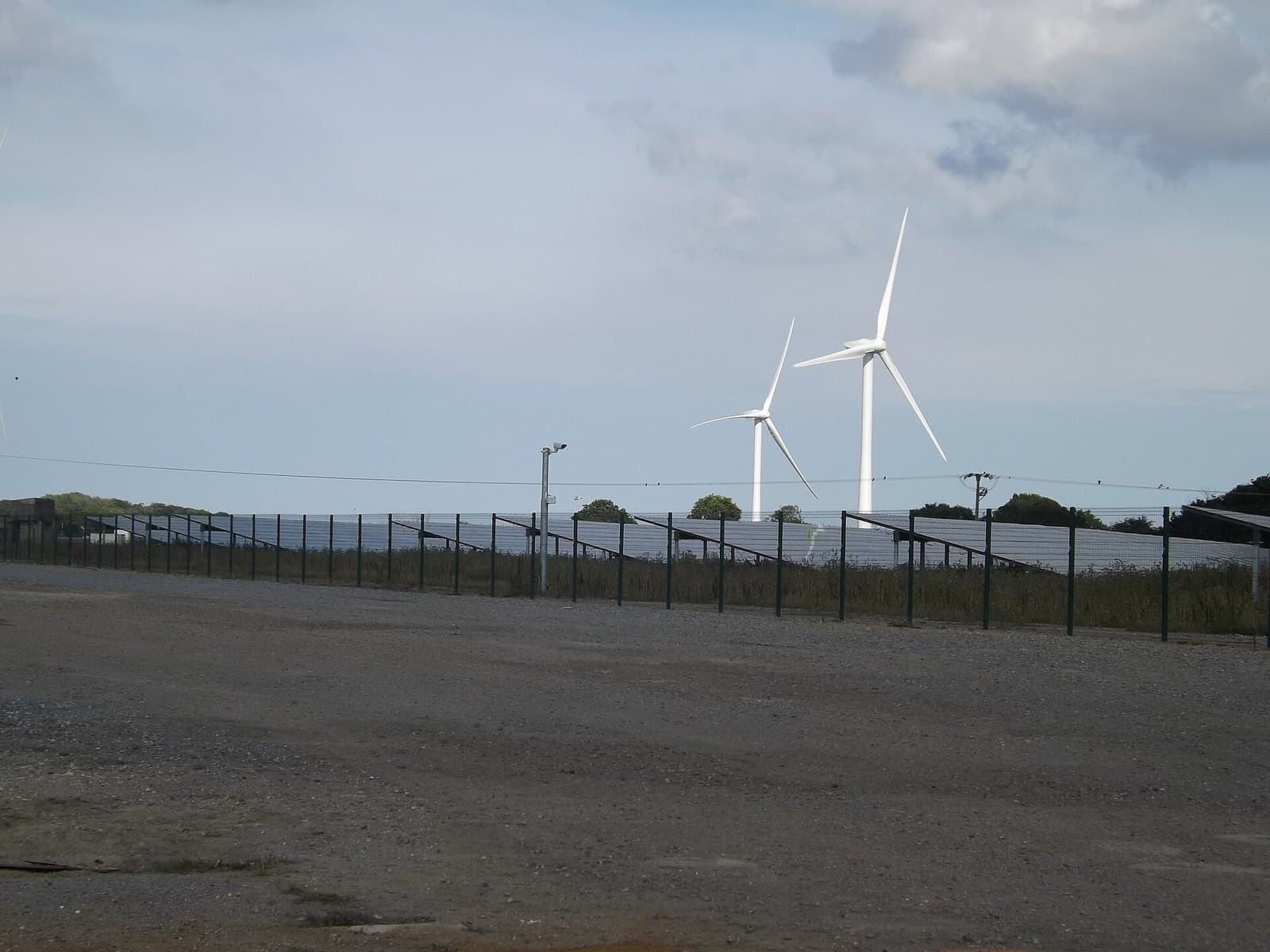
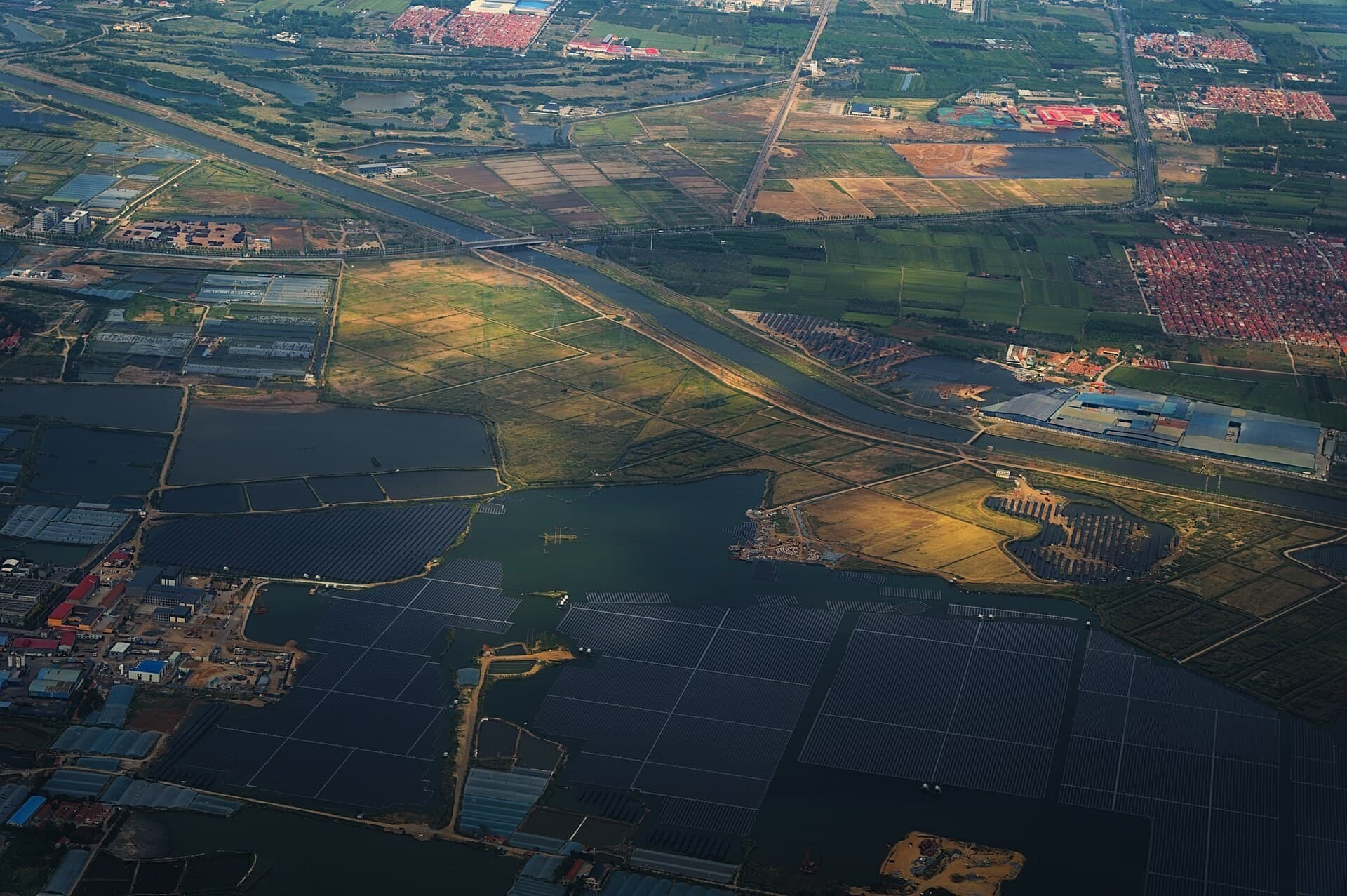
The turn came out of factories. China installed a record 315 gigawatts of solar in 2025, pushing its fleet past 1.2 terawatts; solar generation rose 43% in the year, wind 14%, nuclear 8%; and grid storage additions of 75 gigawatts outpaced the 55-gigawatt growth in peak demand. For the first time, storage is growing faster than the evening peak it exists to cover1. Add the battery pack at $84 a kilowatt-hour and the EV fleet cutting transport fuel, and China's emissions plateau is simply what that industrial system produces once it runs at full scale.
The same state that dominates the transition's supply chains was long assumed to be the transition's laggard, hiding behind 'developing country' framing while permitting coal plants at record rates. Both facts were true; the resolution is that the coal build-out increasingly runs as backup capacity, utilisation falling as clean generation takes the load. What reaches the atmosphere depends on generation, not capacity, and generation is what turned2.
The history of false alarms is why the 21-month streak, not any single figure, is the evidence that matters. Chinese emissions 'peaked' in headlines in 2014-16, when an industrial slowdown flattened coal use for three years before stimulus construction sent the line to new records; they fell in 2022 under zero-COVID and rebounded on reopening. Each earlier pause was really demand weakness, mistaken for progress. The current one is the first with supply-side causation: the economy grew, electricity demand grew faster than most rich countries' whole economies, and emissions still edged down because clean generation grew faster than both2.
The approach can be copied in principle: where clean supply grows faster than demand, emissions fall the same way. Whether that happens elsewhere depends on financing costs, grid connections, access to the equipment, and how fast demand itself is growing. China also sells the equipment for doing it, the same panels, packs, and EVs at the prices its domestic scale created. India, Southeast Asia, and the Gulf are buying the kit in volumes that move the question about their own peaks from whether to when. The Chinese peak, if real, is less a national milestone than the clearest demonstration yet of decarbonisation by deployment: making the clean option the cheap one.
Peak against pledge
The official scorecard is less flattering than the trajectory, which explains Beijing's own reticence about declaring victory. Carbon intensity, emissions per unit of GDP, fell 4.7% in 2025 but only 12% across 2020-25, missing the 18% five-year target1; the 2030 pledge of a 65% intensity cut from 2005 needs faster progress than the last plan delivered. And the new national target announced in 2025, the first framed as an absolute cut, promises 7-10% below peak by 2035, a figure climate modellers immediately noted is far shallower than a 1.5C-consistent path3. The result is that delivery is running ahead of the promises, and the promises are running behind the need.
Line | Change in 2025 |
|---|---|
All CO2 emissions | -0.3%, first structural decline |
Power sector | -1.5%, despite demand growth |
Transport fuel | -3%, on EV adoption |
Cement and building materials | -7% |
Metals | -3% |
Chemicals | +12%, the exception |
Solar / wind / nuclear output | +43% / +14% / +8% |
Storage added vs peak-demand growth | 75 GW vs 55 GW |
Beijing's own communication strategy around the turn is a study in managed expectations. No ministry has claimed the peak; the phrase in official use remains 'plateau period', and the 2030 target stands unamended, which preserves both insurance against a rebound and a bankable overdelivery if the line holds. The reticence has a domestic logic too: declaring victory would invite pressure to close the coal fleet faster than the grid's flexibility, the storage build-out notwithstanding, can yet tolerate, and would hand the coal provinces a grievance the planning system prefers to buy off gradually. For now, the government achieving the decade's most consequential climate milestone prefers not to claim it.
What it changes if it holds
A Chinese peak would change the global arithmetic. China accounts for roughly a third of the world's CO2; a Chinese peak in 2024-25 rather than 2030 shaves gigatonnes off every cumulative pathway and moves the global peak, which requires China plus the already-declining OECD to outweigh growth elsewhere, into this decade's plausible range. It also rewrites the diplomacy. The 'why should we move first' argument that anchored a generation of climate politics in Washington and Delhi loses its referent when the largest emitter's line turns while its economy grows. And it converts the transition's competitive framing from burden-sharing to market-sharing: the country that peaked did so by building the industries every other country now imports from, a point its trade negotiators will not leave implicit.
The rest of the world's demand growth is the other side of that scale, and it is not small: India's coal generation still rises with its grid, Southeast Asian industrialisation runs on gas and lignite contracts signed this decade, and the data-centre build-out adds load on every continent at once. A Chinese peak is necessary for a global one and nowhere near sufficient; that requires the OECD's declines to continue and the emerging world's growth to bend early; cheap Chinese equipment is the likeliest way the second part happens.
Plenty could still reverse it. A property-stimulus revival would reawaken cement and steel; a bad hydro year adds coal generation overnight; the chemicals sector's 12% rise shows coal finding new exits from the power sector into feedstocks1; and the provinces hosting coal jobs retain political weight no five-year plan ignores. CREA's own framing is conditional throughout: a peak is only visible years after the fact, when no subsequent year exceeds it. What can be said today is narrower, and still new: for the first time, China's clean energy has outgrown the demand of the whole economy2.
Read alongside the temperature record, the two stories pull in opposite directions. The temperature record says the atmosphere is running ahead of the treaty; the emissions record says the largest source may have turned ahead of its own schedule. Both are true, and the gap between them is cumulative: the warming already banked reflects two centuries of emissions, and a Chinese peak changes the rate of addition, not the stock. Nothing in Beijing's turn cools 2035. What it changes is the odds that 2060 comes out cooler than it otherwise would have.
What to watch
Four series decide whether 2025 was the summit. Quarterly CREA updates against the 21-month baseline, because two up quarters would end the streak, though a rebound driven by a dry hydro year would say less about the structure than the headline number would suggest1. Hydro output, the swing variable nobody controls. The chemicals line, coal's last growing refuge1. And the 2035 pledge's revision cycle, because a government that has actually peaked five years early can afford a target deeper than 7-10%, and choosing not to deepen it would say what the trajectory alone cannot about intent3. For once, the news might be good.
Lauri Myllyvirta / CREA, China's CO2 emissions have now been flat or falling for 21 months, Carbon Brief: 2025 down an estimated 0.3%; power -1.5%, transport -3%, cement -7%, metals -3%, chemicals +12%; solar +43%, wind +14%, nuclear +8%; 75 GW of storage added against 55 GW of peak-demand growth; carbon intensity -4.7% in 2025 and -12% for 2020-25 against an 18% target.
Lauri Myllyvirta / CREA, Clean energy just put China's CO2 emissions into reverse for first time, Carbon Brief: power-sector emissions falling as wind, solar, and nuclear growth exceeded demand growth from March 2024.
Climate Action Tracker, China: the 2035 target of a 7-10% cut from peak assessed as far short of 1.5C-consistent pathways; 2030 intensity pledge of -65% from 2005.