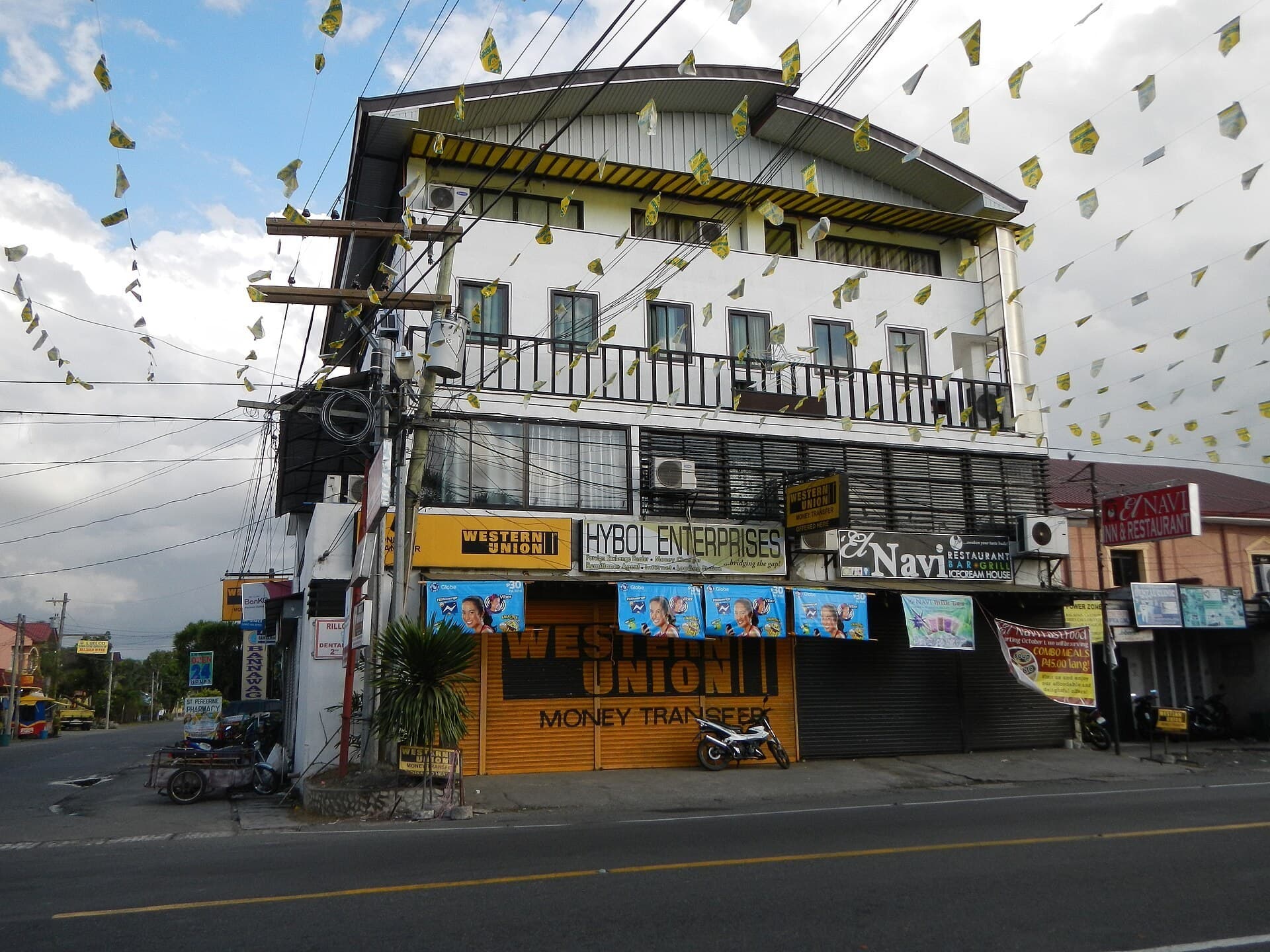
Ask what finances the developing world and the textbook answers arrive in order: foreign investment, development aid, capital markets. The data answers differently. In 2024 migrants sent home $685 billion to low- and middle-income countries, more than foreign direct investment and official aid to those countries combined1. Remittances have exceeded aid in every year this century and beat FDI to developing countries outside China by more than $270 billion as early as 20231. The largest development-finance institution on earth is the payday queue at a money-transfer counter. Strictly, remittances are household transfers, wages sent home, rather than capital seeking a return, so the word 'capital' in the comparison is doing loose work; the justification is functional, because for the receiving country's balance of payments the dollars arrive and stay the way investment dollars would, with fewer conditions.
The flow's shape explains its underrating. It arrives in millions of transactions averaging a few hundred dollars, person to person, untracked by deal announcements and unphotographed at ribbon cuttings. It also behaves unlike every rival flow: investment flees crises and aid follows politics, while remittances rise in bad years, because the sender's employment in Paris or Riyadh is not correlated with the cousin's flood in the home district. Economists call it counter-cyclical. Families call it what it is: insurance, paid by the member who left.
Remittances to low- and middle-income countries in 2024, more than FDI and official aid combined.
Who receives, and what it carries
India leads by volume and it is not close: an estimated $129 billion in 2024, with Mexico second at $68 billion2. South Asia grew almost 12% in the year, the fastest of any region1. But volume understates what the flow means where it is large relative to the economy: in dozens of countries remittances exceed a tenth of GDP, and in the biggest corridor economies they finance the trade deficit, stabilise the currency, and put a floor under rural consumption that no fiscal program matches.
Morocco shows the anatomy. Moroccans abroad sent 117.7 billion dirhams in 2024 and 122 billion, about $13.3 billion, in 2025, roughly 8% of GDP, among Africa's largest inflows, with the central bank projecting 130 billion dirhams by 20273. The French name for the Moroccan flow, transferts des Marocains du monde, names the relationship precisely: not a market, a membership. The money out-earns phosphates in most years and arrives without a single tender, concession, or covenant.
The corridor map is the labour map with a lag. Gulf construction and services anchor the South Asian flows; the United States anchors Latin America's; Europe anchors North and West Africa's, with France, Spain, and Italy the wage sources behind the Moroccan line. Each corridor has its own institutions, its own price, and its own politics, and the aggregate hides how concentrated the machine is: a handful of host countries' labour markets set the disposable income of hundreds of millions of households they will never count as residents.
The informality below the counted number is the other known unknown. Hand-carried cash, hawala networks, and in-kind transfers move sums the balance-of-payments statisticians can only model; most estimates put the true flow meaningfully above the recorded one. That matters for policy in both directions: the developing world's real external cushion is larger than the official $685 billion, and every regulatory push that raises formal-channel costs moves volume into channels nobody can see, which is the standing argument against treating compliance friction as a free good4.
The toll booth
The flow's scandal is its price. Sending $200, the benchmark transfer, cost a global average of 6.49% in early 2025: banks averaged 9.5%, digital providers 3.65%4. The UN's Sustainable Development Goals call for 3%; the G20 has promised reductions since 2011. Against $685 billion, every percentage point of friction is nearly $7 billion a year taken from the world's poorest households' incomes, a sum that would dwarf many bilateral aid budgets, collected disproportionately on the corridors where competition is thinnest, sub-Saharan Africa's above all4.
The fix is arriving from the market's cheap end. Digital corridors run at roughly a third of bank pricing, mobile-money systems have collapsed costs where regulators let them compete, and the fintechs that grew up on this arbitrage now carry meaningful shares of the majors' volume. The remaining expensive miles are political as much as technical: exclusive agreements at post offices, compliance regimes that price small operators out, and cash's stubborn share at both ends of the poorest corridors.
Measure | Value |
|---|---|
Flows to low- and middle-income countries | $685 billion, up 5.8% |
Against FDI plus official aid | Larger than both combined |
India | $129 billion; Mexico $68 billion |
Morocco | MAD 117.7bn in 2024; MAD 122bn (~$13.3bn) in 2025, ~8% of GDP |
Global average cost, $200 transfer | 6.49%; banks 9.5%, digital 3.65% |
SDG target cost | 3% |
What the money does, and does not do
The evidence on impact is unromantic and strong. Remittances raise school enrolment, housing quality, and health spending in receiving households, and they cut extreme poverty in high-corridor regions more reliably than most programs, because targeting is perfect: the sender knows exactly which household needs what. What they mostly do not do is build factories. The flows finance consumption and shelter first, and the perennial policy dream of channelling them into investment, diaspora bonds, matched funds, co-development schemes, has a graveyard of pilots behind it; a recent Moroccan analysis noted that only around a tenth of the inflow builds anything at all5. The money is private, and it behaves like what it is: family income, not policy capital.
The macro dependence cuts both ways, and the sending-side politics are the flow's real risk. Remittance economies import their business cycle from their diasporas' host countries, and they are exposed to a policy instrument with growing appeal to populists everywhere: taxing or restricting outbound transfers. Levies of this kind are advancing from proposal to statute in several host countries, and every one converts a development flow into a diplomatic bargaining chip. A world that fights over chips and cobalt has noticed that wages cross borders too.
The comparison with the other flows is instructive. Foreign investment negotiates: it demands tax holidays, arbitration clauses, and exit options, and the chip and battery plants each arrived with a term sheet. Aid conditions: it moves with donor politics and evaluation cycles. Remittances just arrive, every month, through crisis and coup, asking nothing of the receiving state except a functioning payments system and, ideally, restraint from taxing them twice. The least conditional capital on earth is also the least courted, which says something uncomfortable about what economic diplomacy optimises for.
It is also, household by household, the world's largest poverty program run without an administrator. The $200 that crosses from Marseille to Oujda pays a specific electricity bill, a specific semester, a specific course of medication, selected by someone with perfect information about the recipient and every incentive to monitor outcomes. Development economics spent decades converging on cash transfers as its most robust tool; the diaspora had reached the same conclusion generations earlier and built the infrastructure before the literature existed.
The century's tailwind
Set this piece beside its demographic sibling and the direction of travel is unambiguous. The rich world's workforces are shrinking; the corridor economies' are not, yet; and the price of the only production factor that walks is therefore rising. More migration, managed or not, means more remittances, and the competition among aging economies for young workers hands the sending countries bargaining power they have never held: over visa terms, over portability of pensions, over the fees their citizens pay to send money home. The remittance line on the balance of payments is the developing world's dividend on the rich world's demographic deficit, and both curves say it grows for decades.
For Morocco specifically, the strategic question is whether the relationship deepens beyond the transfer. The diaspora that sends 8% of GDP also holds skills, networks, and savings the industrial strategy could use; the tenth that currently builds anything5 is the floor, not the ceiling. Portable pensions, credible investment vehicles, and dual-belonging policies are the unglamorous plumbing that would raise it, and the countries that build that plumbing first will convert their emigration histories into capital-account advantages as the numbers here already hint.
What to watch
Three numbers, annually. The global average cost against the 3% target4, because it is the single most improvable number in development finance and every basis point is measured in school fees. Host-country transfer taxes moving from bill to law, because the first large corridor to be taxed will test how movable this flow actually is, toward crypto rails, informal channels, or simply smaller dinners in the sending city. And the Gulf and European labour agreements signed by the big sending states, Morocco's included3, because those documents, not aid strategies, are where the developing world's largest capital inflow is actually negotiated. The money will keep coming either way. Six hundred and eighty-five billion dollars a year of family obligation has outlasted every crisis thrown at it, which is more than can be said for any other source of development finance.
World Bank / KNOMAD, In 2024, remittance flows to low- and middle-income countries are expected to reach $685 billion: larger than FDI and ODA combined; growth of 5.8%; larger than aid in every estimate since 2000 and above FDI to LMICs ex-China by over $270 billion in 2023; South Asia up 11.8%.
World Bank, reported by Business Standard, At $129 bn, India top recipient of remittances (December 2024); Mexico second at $68 billion.
Atalayar, Moroccans living abroad sent more than 117.7 billion dirhams in 2024; Morocco World News, Morocco's diaspora remittances reached over $13.3 billion in 2025; IFAD: about 8% of GDP in 2024; Bank Al-Maghrib projections to MAD 130 billion by 2027.
World Bank, Remittance Prices Worldwide, with the 2025 survey summaries: global average 6.49% for $200 in Q1 2025; banks 9.5%; digital providers 3.65%; SDG target 3%.