In December 2025 Morocco's car plants finished their millionth vehicle of the year, the target the industry ministry had been repeating since the decade began1. The country that holds the world's largest phosphate reserves, and whose state phosphate company was for generations the export economy in one institution, now sells more abroad in vehicles and parts than in the mineral it stands on. Automotive has been the largest export sector for roughly a decade; the million-unit year is the point where the scale stops being arguable2.
The sector's export revenue ran at 112.2 billion dirhams, about $12.3 billion, in the first nine months of 2025, down 2.7% on the same period of 2024 in a soft European market3. The nearest yardstick is imperfect but telling: OCP, the phosphate monopoly, earned 114 billion dirhams in total revenue across all of 2025, a strong year4, so nine months of automotive exports roughly matched twelve months of the mineral champion's entire turnover. The measures differ, sector exports against one company's revenue, but ministry trade data has ranked vehicles, not phosphates, as the largest export line for a decade. A country of forty million people had no domestic steel-to-showroom supply chain twenty years ago.
Morocco's vehicle production in 2025, the year the industry reached the target it had pursued since the decade began.
How a phosphate economy got an assembly line
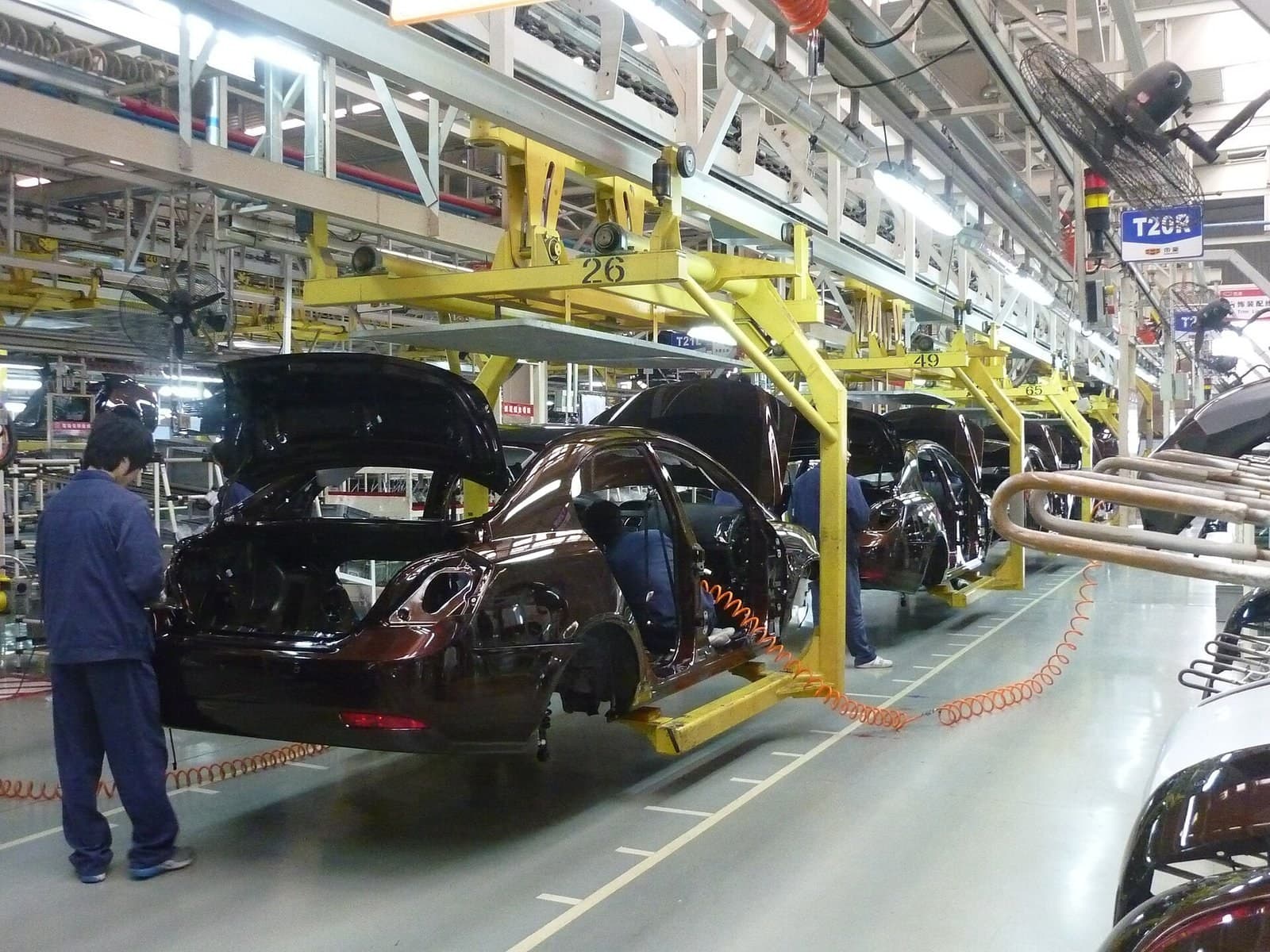
The industry is older than it looks. Somaca, the Casablanca assembler, has bolted together French designs since 1959. What changed the scale was Renault's greenfield plant at Melloussa outside Tangier, opened in 2012 with the explicit logic of making Morocco a low-cost export base onto Europe, followed by Stellantis at Kenitra in 20192. Both bets have been doubled. Renault's Moroccan plants produced over 394,000 vehicles in 2025, making the country the group's second-largest production base worldwide: about one Renault in six, globally, is Moroccan-built5. Stellantis inaugurated a 1.2-billion-euro expansion of Kenitra in July 2025, on a stated path to 535,000 units of annual capacity by 20306.
Plant | Operator | Capacity |
|---|---|---|
Melloussa, Tangier | Renault Group | About 340,000 a year |
Somaca, Casablanca | Renault Group | Assembly since 1959 |
Kenitra, Atlantic Free Zone | Stellantis | On a path to 535,000 by 2030 |
The mix matters as much as the volume. These plants build small, affordable models for European buyers: Dacia's entry range from Tangier, small Peugeots, Opels, and Fiats from Kenitra, including small electric models. Affordable is the segment where European assembly struggles to make margin at European wages, which is why the work migrated across the strait rather than across the Rhine.
Dacia is the clearest case. Renault's budget brand became Europe's unlikely bestseller by refusing to gold-plate, and a brand whose whole promise is a low sticker price lives or dies on factory cost. Tangier was built for it: a high-volume plant, on cheap land, staffed by trained workers at Moroccan wages, an hour from a port designed around its output. When European buyers traded down through a decade of squeezed incomes, they traded into cars from Melloussa. Morocco industrialised, in part, on the arithmetic of European austerity.
The port is the factory gate
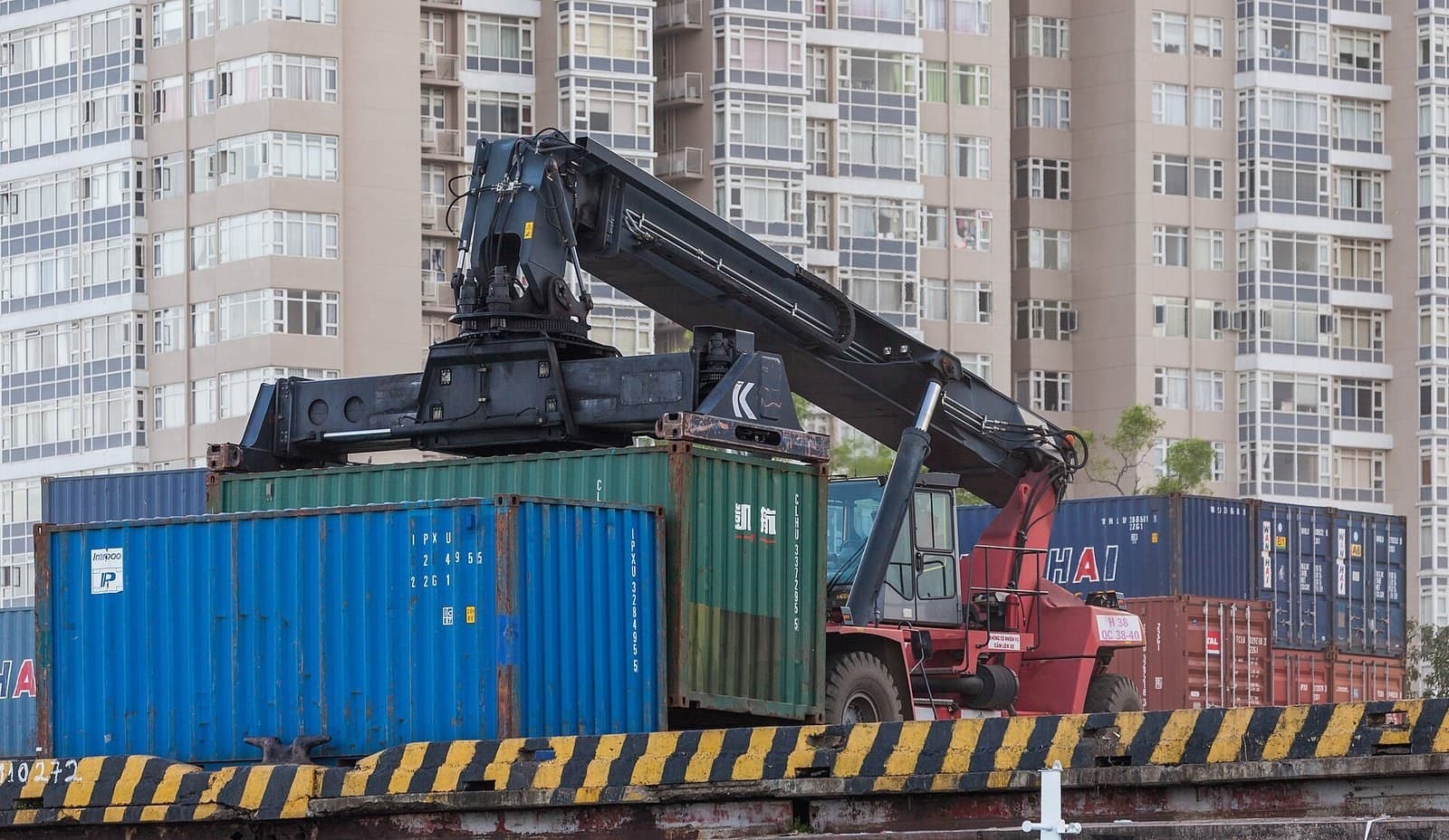
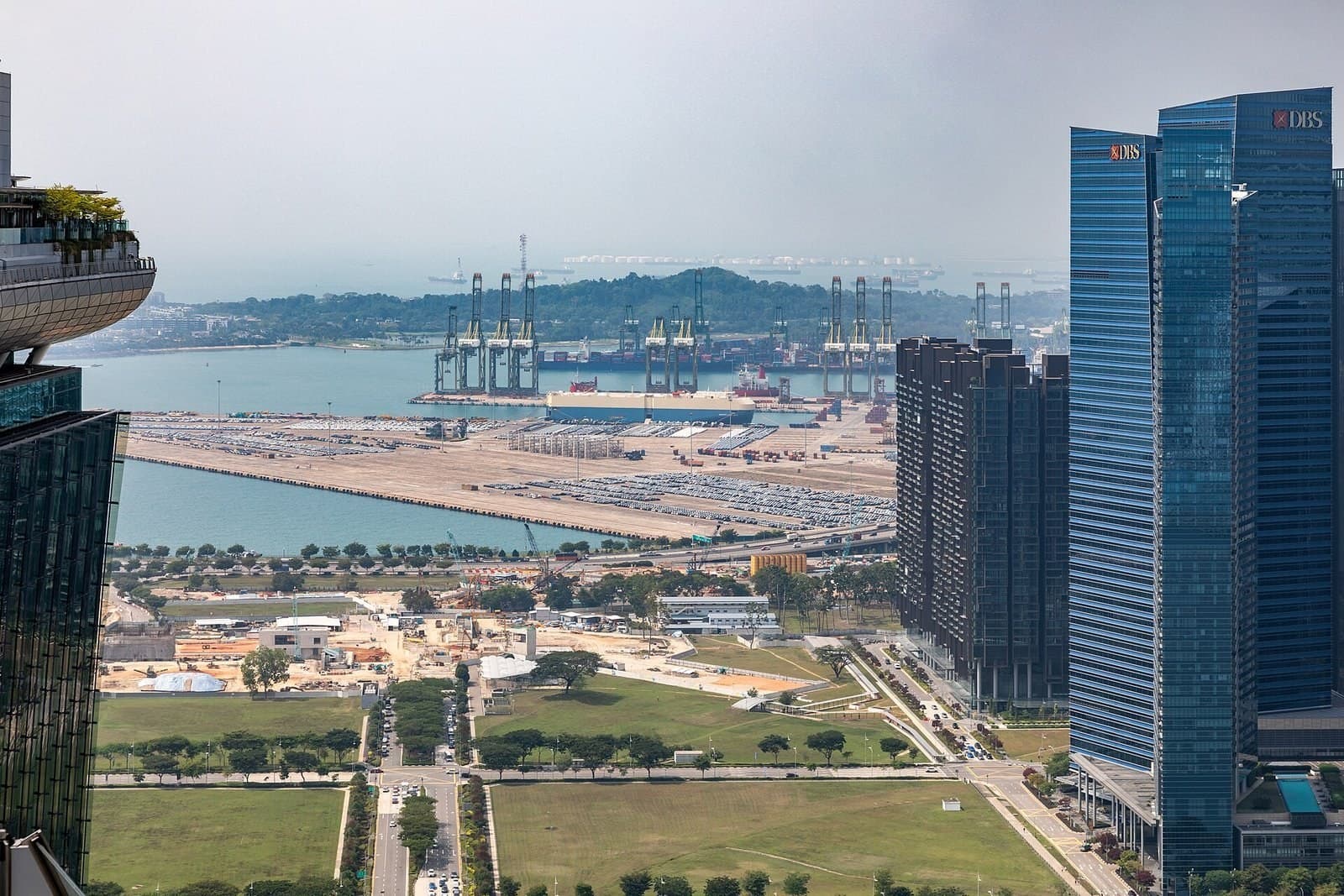
None of it works without Tanger Med. The port complex east of Tangier handled 11.1 million containers in 2025, up 8.4%, and moved over 161 million tonnes of goods, making it the largest port in both the Mediterranean and Africa, ahead of Algeciras, Valencia, and Piraeus7. Its dedicated vehicle terminal is built for a million cars a year, fed by rail directly from the Renault and Stellantis plants8. Spain is 14 kilometres away; a car leaving the Kenitra line can be on an Iberian truck route in under two days. The port and the plants were planned as one system, which is the part other would-be assembly hubs find hardest to copy.
The port itself is young. It opened in 2007 on a stretch of coast that had nothing on it, was doubled by Tanger Med II in 2019, and now handles more containers than its stated design capacity of 9.3 million7. The sequencing is the lesson: the port came first, the Renault plant followed it within five years, and the supplier parks grew in the corridor between them. Infrastructure built ahead of demand is a gamble that mostly fails; this one is the strongest counterexample on the continent, and its cash flows now help finance the state's next rounds of industrial policy.
Why the work came here
Three ingredients, none of them mysterious. Wages a fraction of European levels within a day's drive of European buyers. Trade agreements with both the EU and the United States that let Moroccan-built vehicles and parts enter tariff-free. And a state that treats the sector as strategic: free zones, training institutes cut to the carmakers' specification, and infrastructure delivered on schedule. The supplier base followed the assemblers; hundreds of parts plants now feed the two hubs, and the industry ministry has pushed local content upward year by year, from wiring harnesses toward engines, gearboxes, and stamping. That is the difference between an assembly platform and an industry: the first can leave, the second accumulates.
The same playbook is running in adjacent sectors. An aerospace cluster around Casablanca's Midparc free zone machines and wires for Boeing and Safran supply chains, and the export ledger's fastest-growing lines in recent years have been industrial goods that did not exist in it a generation ago. The pattern is consistent: pick a sector where European producers need a near-shore cost base, build the zone and the training pipeline before asking for the investment, and let the first anchor tenant recruit the second.
One continent's shopping basket
The concentration that built the industry is also its exposure. Moroccan plants sell overwhelmingly into Europe, in the entry segments, priced in euros. When European small-car demand softened in 2025, Moroccan export revenue fell with it, 2.7% over nine months, in a year when production volume was still climbing3. Building more cars for less revenue is what it looks like when an assembly economy's customer catches a cold.
The competitive set is also moving. Turkey and Romania play the same role for the same carmakers at comparable distance, Balkan and North African rivals court the next plants, and Chinese manufacturers are opening European-facing capacity of their own. Morocco's answers are the ones already in the table: deepen local content so more of each car's value stays onshore, add the battery so electric versions of the same segments are Moroccan from cell to ship, and let the port's scale keep unit logistics costs below anything a landlocked rival can quote.
The battery brings the rock back
The next phase closes a neat loop. Gotion High-Tech, a Chinese battery maker part-owned by Volkswagen, is finishing Africa's first battery gigafactory in Kenitra's Atlantic Free Zone: a first phase of 10 gigawatt-hours of cells and packs, announced at $1.3 billion, with a stated long-term ambition of 100 gigawatt-hours9. Production was expected by late summer 2026, a timeline that has already slipped once9.
The chemistry is what matters here. The plant will make lithium-iron-phosphate cells, the cobalt-free chemistry taking over the affordable end of the electric market, and phosphate is the P in LFP. The mineral Morocco has exported raw for a century, and that the car industry displaced from the top of the export table, re-enters the value chain as a cathode input for the cars the country already builds. Whether Moroccan phosphate actually feeds the Kenitra cathode line will depend on purity grades and contracts not yet public; the geography and the ownership stakes point that way.
The steps between rock and cathode deserve spelling out, because each is a separate industrial decision. Phosphate rock becomes purified phosphoric acid; battery-grade acid meets iron and lithium to become LFP cathode material; the cathode material feeds Gotion's cells; the cells feed the Kenitra assembly lines. Morocco performs the first step at world scale, and OCP has announced purified-acid capacity aimed at battery specifications. The middle steps, precursor and cathode production, are the ones that will decide whether the gigafactory is a customer for Moroccan chemistry or simply a tenant using imported inputs. Nothing about the loop is automatic: battery-grade purity is a different business from fertilizer-grade volume, the lithium still has to be imported, and Gotion's procurement will follow price and specification. What geography changes is the freight arithmetic, and what the state's stakes change is the incentive to make the contracts land onshore.
Ownership is the other asymmetry. The plants, the brands, and the export decisions belong to Renault, Stellantis, and now Gotion; the state owns the port, the zones, the rails, and the training system around them. That is a different bargain from the phosphate model, where the state owns the resource outright. An assembly economy can lose an allocation round it never gets to vote in, which is why every increment of local content, every engine plant and stamping line added onshore, is less an efficiency than an insurance policy: the deeper the roots, the more a departure would cost the companies that would do the departing.
What to watch
The 2025 dip is the caveat: exports fell 2.7% because European demand for exactly these segments softened3, and Morocco's model concentrates its risk on one continent's small-car market. Watch three numbers through 2026 and 2027. European small-EV volumes, because the plants' next allocation decisions follow them. Kenitra's climb toward 535,000 units, because the expansion was inaugurated before the demand that justifies it6. And the date the first Moroccan-made cell ships from the Gotion line, because a gigafactory that opens turns an assembly cluster into something closer to a full automotive economy, and one that has already slipped once will be judged on delivery9.
AGBI, Morocco hits 2025 production target of 1 million cars (December 2025).
Yabiladi, Morocco's automotive industry: from early assembly to a global export powerhouse: Somaca assembling since 1959; Renault Tangier opened 2012; Stellantis Kenitra 2019; automotive as the top export sector.
Morocco World News, Morocco Records 2.7% Decline in Automotive Exports in 2025: MAD 112.2 billion in the first nine months of 2025, against MAD 115.3 billion a year earlier.
Morocco World News, OCP Group Reports 17% Revenue Growth in 2025, Reaches MAD 114 Billion.
Atalayar, Morocco consolidates its position as Renault's second-largest global production base (July 2026): over 394,000 vehicles produced in 2025; about one Renault in six worldwide is Moroccan-built; Tangier plant capacity about 340,000.
Roncucci and Partners, Morocco: a new horizon for the automotive industry (July 2025): Kenitra reached 200,000 units of capacity by 2020; EUR 1.2 billion expansion inaugurated July 2025, with a pathway to 535,000 vehicles a year by 2030.
Tanger Med Port Authority, Port activity report 2025 (February 2026): 11,106,164 TEUs, up 8.4%; over 161 million tonnes of goods; the largest port complex in the Mediterranean and Africa.
Atalayar, The Port of Tangier Med and the automotive sector: vehicle terminal built for one million cars a year, fed by rail from the Renault and Stellantis plants.
pv magazine, Morocco hosts Africa's first battery manufacturing plant and S&P Global Mobility, Gotion High-Tech plans $1.3 billion gigafactory in Morocco: first phase of 10 GWh of LFP cells and packs in Kenitra's Atlantic Free Zone; long-term ambition of 100 GWh; production expected late summer 2026 after an earlier target slipped.